

Digital product creators of printables, ebooks and more usually assume they picked the wrong format. The wrong idea. The wrong type of product. So they keep searching for something better.
A better planner. A more unique printable. A different ebook topic. A new template angle. Another digital download that feels like it might finally work.
But here is an idea you may not have considered: the same product can succeed or fail depending on the niche you put it in.
Same product type. Same basic effort. Completely different results.
Once you understand that, your product ideas become easier to find because you stop asking only, "What product should I create?" and start asking the better question: "Where is there already demand?"
Start With the Niche, Not the Product
Most people start with the product.
They ask things like:
- What should I create/write next?
- What kind of digital product is selling right now?
- Should I make a planner, ebook, tracker, template, printable, or journal?
Those are not bad questions, but they are not always the best starting point.
The stronger approach is to start with a niche that already has an active audience, then look at the types of products that fit naturally inside that niche.
When the niche is strong, you do not need a wildly original idea. You need a relevant one. And relevance is much easier to create when the audience already cares about the topic.
Why Gardening Is a Strong Example of a Profitable Digital Product Niche
Gardening is a perfect example because it is massive, evergreen, and full of repeat interest.
People do not usually garden once and then move on forever. They plan, plant, learn, track, adjust, solve problems, and start again the next season. Some people grow vegetables. Some grow herbs. Some want beautiful container gardens. Some love houseplants. Some want to teach kids how to garden.
That creates opportunities for all kinds of digital products and books.
The product types themselves are not unusual. Planners, trackers, journals, how-to guides, printables, clipart, labels, signs, and themed party products exist in all kinds of niches.
But in a niche like gardening, they have a built-in reason to exist because people are already looking for help, inspiration, organization, or decorative touches related to something they enjoy.
Break the Gardening Niche Into Smaller Sub-Niches
This is where product ideas start to multiply quickly.
Instead of looking at gardening as one big topic, break it into smaller sub-niches, such as:
- Vegetable gardening
- Herb gardening
- Container gardening
- Children's gardens
- Houseplants
Now you are not staring at one broad niche. You are looking at five focused groups of buyers.
Each group has its own interests, problems, goals, and reasons to buy.
A person growing herbs on a kitchen windowsill is not looking for the exact same products as someone planning a backyard vegetable garden. A parent creating a children's garden has different needs than someone trying to keep houseplants alive.
That is what makes this so powerful. You are not forcing one general product into a giant category. You are creating specific products for specific groups inside a niche that already has demand.
How to Create 15 or More Product Ideas From One Niche
Once you have a few sub-niches, you can quickly combine them with proven product types.
Start with book-style and simple digital product formats, such as:
- Journals
- Trackers
- Planners
- How-to guides
- Seasonal guides
Now choose one sub-niche and pair it with those formats.
For herb gardening, you could create:
- Herb Garden Planner
- Herb Watering Tracker
- Indoor Herb Growing Guide
- Seasonal Herb Planting Calendar
- Herb Care Journal
That is five ideas from one small slice of the gardening niche.
Now do the same thing with vegetable gardening:
- Vegetable Planting Planner
- Harvest Tracker
- Companion Planting Guide
- Seasonal Garden Checklist
- Crop Rotation Planner
Now you are at ten ideas.
Move to container gardening, and you might have:
- Small Space Garden Planner
- Container Watering Tracker
- Balcony Gardening Guide
- Seasonal Container Planting Guide
- Container Garden Journal
Now you are at 15 ideas, and you did not have to invent a brand-new product type to get there.
You simply took products people already understand and placed them inside a niche where people already have a reason to use them.
Add Printable and Visual Digital Products
Now layer in another group of products: printable and visual digital downloads.
These might include:
- Printable labels
- Clipart
- Wall art
- Signs as digital downloads
- T-shirt graphics
Again, these product types are not unique to gardening. But the gardening niche gives them direction.
You could create:
- Printable herb labels
- Vegetable garden row markers
- Botanical clipart sets
- Garden quote wall art
- Fresh Herbs kitchen signs
- Gardening-themed T-shirt graphics
Now you have gone beyond books and planners into printable and design-based products.
And the process is still simple: take a proven product type, connect it to a strong niche, then make it specific enough that the right buyer immediately understands why it is useful or appealing.
Combine Gardening With Another Niche for Even More Ideas
You can also expand by combining two niches.
For example, gardening plus parties creates a completely different set of product opportunities.
Someone planning a garden-themed birthday party, baby shower, bridal shower, tea party, or outdoor gathering may be looking for themed decorations, games, and printables.
That opens the door to products like:
- Garden-themed cupcake toppers for adults or kids
- Printable garden party games
- Garden party banners
- Place cards for outdoor events
- Garden-themed invitations
These are party products, but the gardening theme makes them more specific. And specificity is often what helps a product stand out.
A plain printable party game is easy to overlook. A printable garden party game for a children's birthday, bridal shower, or spring gathering is much clearer. The buyer knows exactly what it is for.
What This Shows About Digital Product Success
None of these product types are rare.

Journals, trackers, planners, guides, printables, labels, clipart, wall art, signs, T-shirt graphics, cupcake toppers, banners, place cards, and invitations already exist.
That is the point.
Success with digital products and books is often not about finding a product type nobody has ever seen before. It is about placing familiar product types into niches where people already want help, ideas, organization, inspiration, or themed solutions.
The product matters, of course. It still needs to be useful, attractive, clear, and easy to understand.
But the niche gives the product its power.
Why the Right Niche Makes Product Creation Easier
When you choose a niche with demand, product creation becomes easier because the audience gives you clues.
You can look at what people are trying to do, what problems they are solving, what seasons matter to them, what supplies they use, what events they celebrate, and what results they want.
In gardening, people need help with things like planting, watering, organizing seeds, tracking harvests, labeling plants, decorating garden spaces, planning themed parties, and learning new techniques.
Each of those needs can become a product.
This is why niche-first thinking is so useful. You are not pulling ideas out of thin air. You are watching what an audience already does and creating products that fit into those activities.
Product Type Still Matters - But It Comes Second
This does not mean product type is unimportant.
A good product format can make the idea easier to use, easier to sell, and easier for the buyer to understand.
But product type should not be the only place you look for opportunity.
A planner in a weak niche may struggle. A simple tracker in a strong niche may do well because people actually need it.
The better question is not just, "Should I make a planner?"
The better question is, "Who needs a planner, and what do they need it to help them do?"
That one shift changes everything.
The Takeaway: Choose the Niche Before You Choose the Product
If you have been stuck trying to come up with your next digital product or book idea, try reversing the process.
Do not start by asking what product you should create.
Start by asking what niche has demand.
Then let Amy Harrop show you specifically all the potential of the gardening niche. Even if you think your audience has nothing to do with gardening, you can still take advantage of the relational elements gardening has with everyday life.
This Expert Training Delivers:
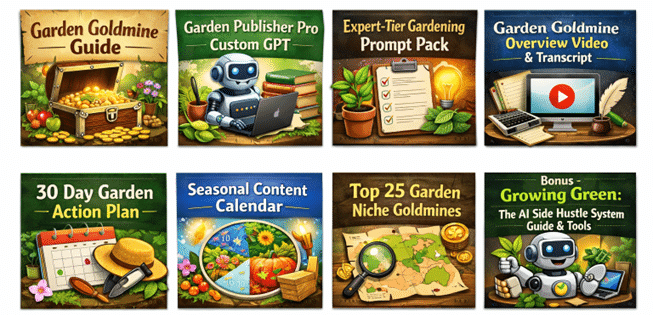
A single strong niche can lead to planners, trackers, journals, how-to guides, seasonal products, labels, clipart, wall art, signs, party printables, invitations, and more.
That is why success with digital products and books is not only about what you create.
It is about where you create it.
The right niche can turn ordinary product formats into targeted, useful, desirable offers.
And once you understand that, finding your next bestsellers practically happens on autopilot.